Mobile Apps
Building an App for US Schools in 2026: Cost, Sign-In and Student Privacy
What it takes to build an app US schools will adopt: Clever and ClassLink sign-in, FERPA and COPPA, accessibility, cost and timeline, with a live example.
By Kazim Noorani, Managing Director
An app for US schools has to do three things beyond working well: let teachers sign in through the systems their district already uses, such as Clever and ClassLink; handle student data the way FERPA, COPPA and state laws expect; and be accessible. Our app projects start from USD 8,000 for a focused first version on iPhone and Android, and most first versions take 8 to 12 weeks.
This guide covers each of those, using Bizi, the classroom rewards app we build for US schools, as the example.
A live example: the Bizi app for US schools
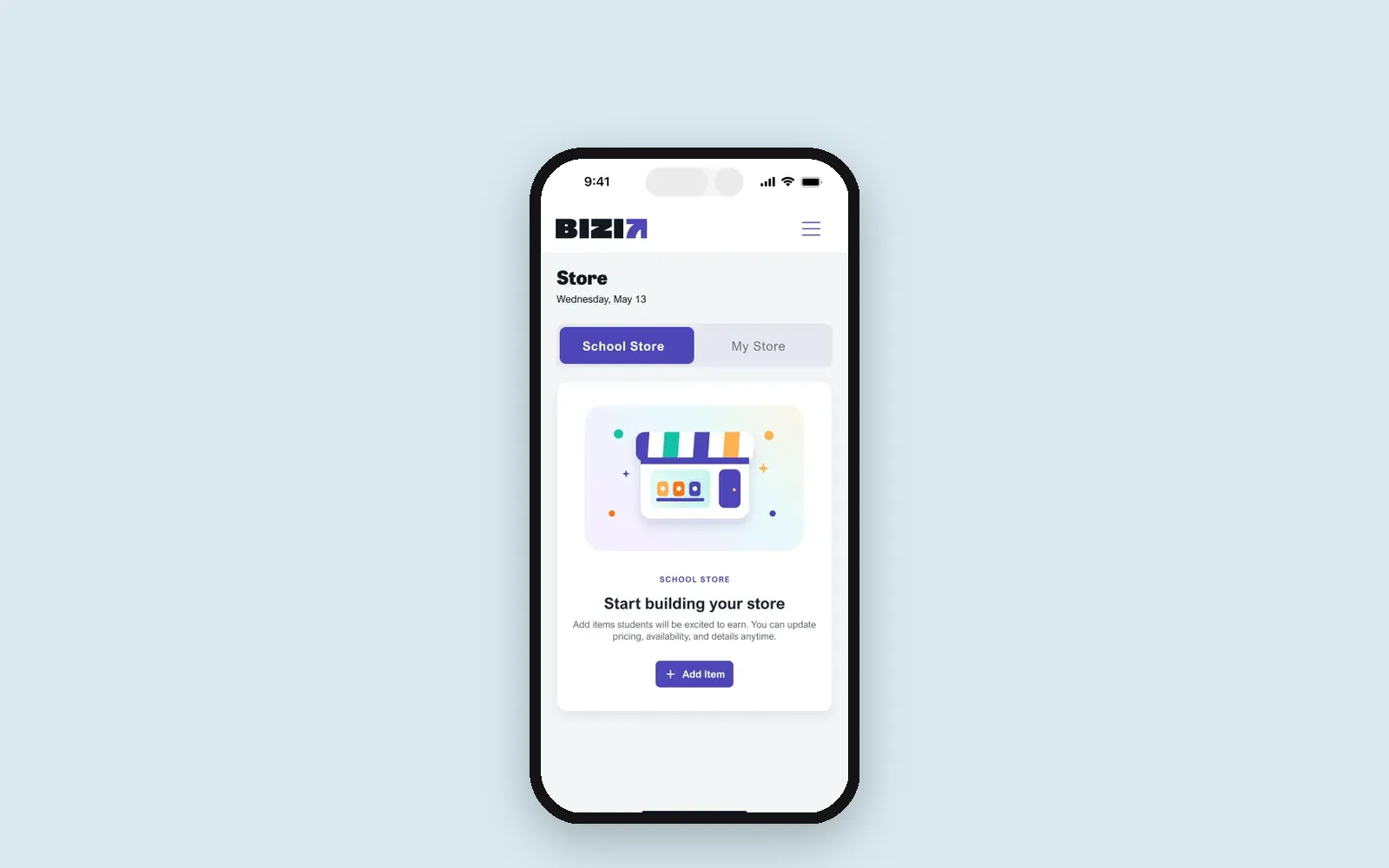
Bizi helps US K-12 schools recognize students consistently. Teachers hand out recognition in class, students spend it in a school store, and staff see it all in one place. We build and ship the Bizi app that teachers and school admins use, and support the Bizi web platform behind it.
The app runs on iPhone and Android from one Flutter codebase, so every feature lands on both together. Teachers manage the school store, see their pay period, bonus and flag totals, and sign in with Clever or ClassLink, which remembers their school next time. Version 2.0.7 shipped to the App Store and Google Play on November 7, 2026, and the app has passed 1,000 downloads on Google Play alone.
Why do Clever and ClassLink sign-in matter?
Many US districts manage teacher and student accounts through Clever or ClassLink. Supporting them means teachers sign in with the account they already use every day, and districts do not have to create new passwords for your app. For a school buyer, missing district sign-in is often a reason to say no.
Small details count: Bizi remembers the last school a teacher picked, so they skip the school picker the next time they sign in.
What do FERPA and COPPA mean for your app?
- FERPA protects student education records. Schools can share them with an app provider acting for the school, but the school must keep control of the data, and districts usually ask vendors to sign a data privacy agreement covering use, security, retention and deletion
- COPPA covers personal information from children under 13. The FTC's amended COPPA Rule has applied in full since April 22, 2026, adding stricter rules such as written data retention policies and a written security program
- State laws add more. California's SOPIPA, for example, limits how edtech companies can use student data, and many states expect a signed privacy agreement before a district buys
In practice: collect only the data the app needs, never use student data for advertising, encrypt it, let schools delete it, and write all of this into a clear privacy policy. This is a summary, not legal advice; have a lawyer who works with edtech review your policies and agreements.
Does a school app need to be accessible?
Yes. Public school districts are expected to provide accessible digital tools, and many now require accessibility documentation from vendors. Building to WCAG 2.1 AA or higher from the start, with readable text sizes, enough color contrast, screen reader labels and keyboard support on the web, is far cheaper than fixing it after a district asks.
What drives the cost?
- Who uses it: teachers only, or teachers, students, parents and admins, each with their own screens
- District sign-in and rostering through Clever, ClassLink or Google
- A web dashboard for admins alongside the phone app
- Points, rewards, stores, messaging or reports
- Privacy and security work: data agreements, retention rules, encryption and audit logs
- Publishing and releases on the App Store and Google Play
How long does it take?
A focused first version usually takes 8 to 12 weeks, and apps with several user types, payments or heavy integrations 12 to 20 weeks. Plan around the school year: districts often decide in spring and roll out in late summer, so a pilot with one or two schools during the year gives you proof before buying season.
Working with a team outside the US
India is 9.5 to 10.5 hours ahead of US Eastern time, so we schedule calls in your morning or late afternoon and work moves forward overnight. Infigrity also has an office in Burlington, Massachusetts. What protects you is the same with any team: a written scope, milestones, an NDA, and the code, store accounts and data in your company's name.
Frequently asked questions
How much does it cost to build an education app?
Our app projects start from USD 8,000 for a focused first version on iPhone and Android. District sign-in, admin dashboards, several user types and privacy work add to the price.
Can an app support Clever and ClassLink sign-in?
Yes. The Bizi app we build for US schools signs teachers in with Clever and ClassLink and remembers their school for next time.
Does my school app need to follow FERPA and COPPA?
If it handles student education records for schools, FERPA applies through your agreements with districts. If it collects personal information from children under 13, COPPA applies. Have a lawyer review your policies.
Should a school app be built with Flutter?
Flutter works well for most school apps: one codebase serves iPhone and Android, so features ship to both together. Bizi is built in Flutter.
How long does it take to build an app for schools?
A focused first version usually takes 8 to 12 weeks. Plan launches around the school year, with a pilot before districts make buying decisions.
Related Services
Planning a project like this?
Tell us what you need. We reply within one business day with next steps, a rough timeline and the questions that matter.