Working With Us
Clickable Prototypes: Why We Agree the Real Thing Before Building Your Website or App
What a clickable prototype is, how it differs from design mockups, what it costs and saves, and four prototypes our clients signed off before the full build.
By Kazim Noorani, Managing Director
A clickable prototype is a working version of your website or app that you can open on your own phone and laptop, click through and share with your team before full development starts. Unlike static design mockups, it shows real pages, real navigation and how the layout behaves on every screen size. You agree the structure, design and journeys on the real thing, so the build that follows has far fewer surprises, change requests and delays. For software, our prototypes usually take 2 to 4 weeks.
Why not just approve design mockups?
Mockups are pictures of pages. They hide the questions that cause rework later: what happens on a phone, how menus open, where a button leads, how long a page really is, and whether a visitor can find what they came for. People approve mockups, then see the live site and ask for changes, which costs time and money at the most expensive stage. A clickable prototype brings those conversations to the start.
Four prototypes our clients signed off first
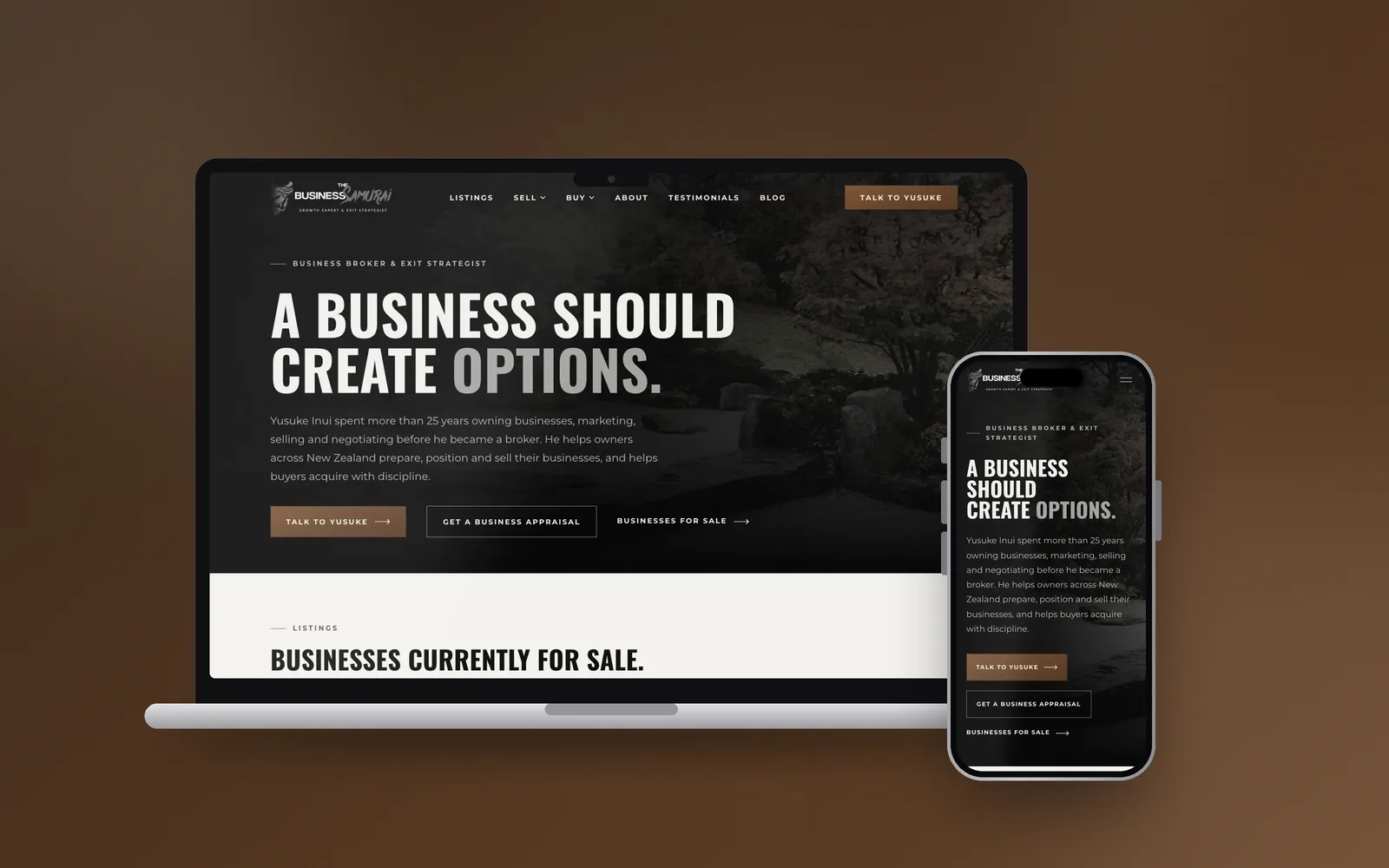
- The Business Samurai, New Zealand: a business broker and exit strategist. We built every page in the agreed scope as a responsive prototype from their brand guidelines, with separate paths for owners wanting an appraisal and buyers browsing businesses for sale, to agree the design before the WordPress build
- Shriji Creation, New York area: an Indian ethnic wear label. The prototype tests an inquiry-led catalog, where every product leads to an inquiry, a styling appointment or WhatsApp instead of a cart, with real customers before committing to the full build
- Swasth Origins: a premium food brand that sells to home shoppers and approved wholesale buyers. The client can click through both buying journeys on one site before choosing the production platform
- Hirani Industries: a family business group. A scroll-driven timeline of the group's history and structured data linking its businesses, agreed on a real page before the WordPress build
What a good prototype includes
- Every page or screen in the agreed scope, not just the home page
- Your real brand colors, fonts and logo, and real or near-final content
- Working navigation, menus, forms and the main journeys, such as booking, inquiry or checkout
- Correct behavior on phones, tablets and desktops
- A shareable link, so your team and a few customers can try it
Is a prototype wasted work?
No, if it is built in the same technology as the final product. We build website prototypes in Next.js with your design tokens, so the agreed layout, components and content carry into the production build instead of being redrawn. For WordPress or Shopify projects, the prototype becomes the exact specification the theme is built to.
When can you skip it?
For a small brochure site with a clear brief and a tight deadline, a design review on a staging site can be enough. Raewyn Barry's coaching site in New Zealand was designed and built in 10 days. For a new product, an app, an online store with unusual buying rules, or a redesign with several decision makers, a prototype nearly always saves more time than it takes.
How to review a prototype
- Open it on your own phone first; most of your visitors will
- Try the main task a customer comes for, such as booking, asking for a quote or buying, from the home page and from a Google landing page
- Ask two or three real customers to try it while you watch, without helping
- Collect feedback in one list, agreed by everyone who signs off
- Sign off the structure and journeys before polishing words and images
Frequently asked questions
What is a clickable prototype?
A working version of your website or app that you can click through on your own devices and share before full development. It shows real pages, navigation and behavior on every screen size, unlike static mockups.
How long does a prototype take?
For software, usually 2 to 4 weeks. Website prototypes depend on the number of pages and journeys in scope.
Is the prototype thrown away?
Not when it is built in the same technology as the final product. Our website prototypes are built in Next.js with your design tokens, so layouts, components and content carry into the build.
Can customers test the prototype?
Yes. Shriji Creation's prototype was built so the client could test it with real customers before committing to the full build.
Do I need a prototype for a small website?
Not always. A small site with a clear brief can go straight to design and build; Raewyn Barry's site was designed and built in 10 days.
Planning a project like this?
Tell us what you need. We reply within one business day with next steps, a rough timeline and the questions that matter.
More Insights
Offshore Development Team in India vs a Local Agency: An Honest Comparison
How to Choose a Web Development Company in India for a US, Canadian or Australian Business