Software
Custom POS and Inventory Software: What It Costs, What It Needs, and When to Build
When a custom point-of-sale and inventory system beats a monthly subscription, the features that matter, what it costs, and the multi-company POS platform we built.
By Kazim Noorani, Managing Director
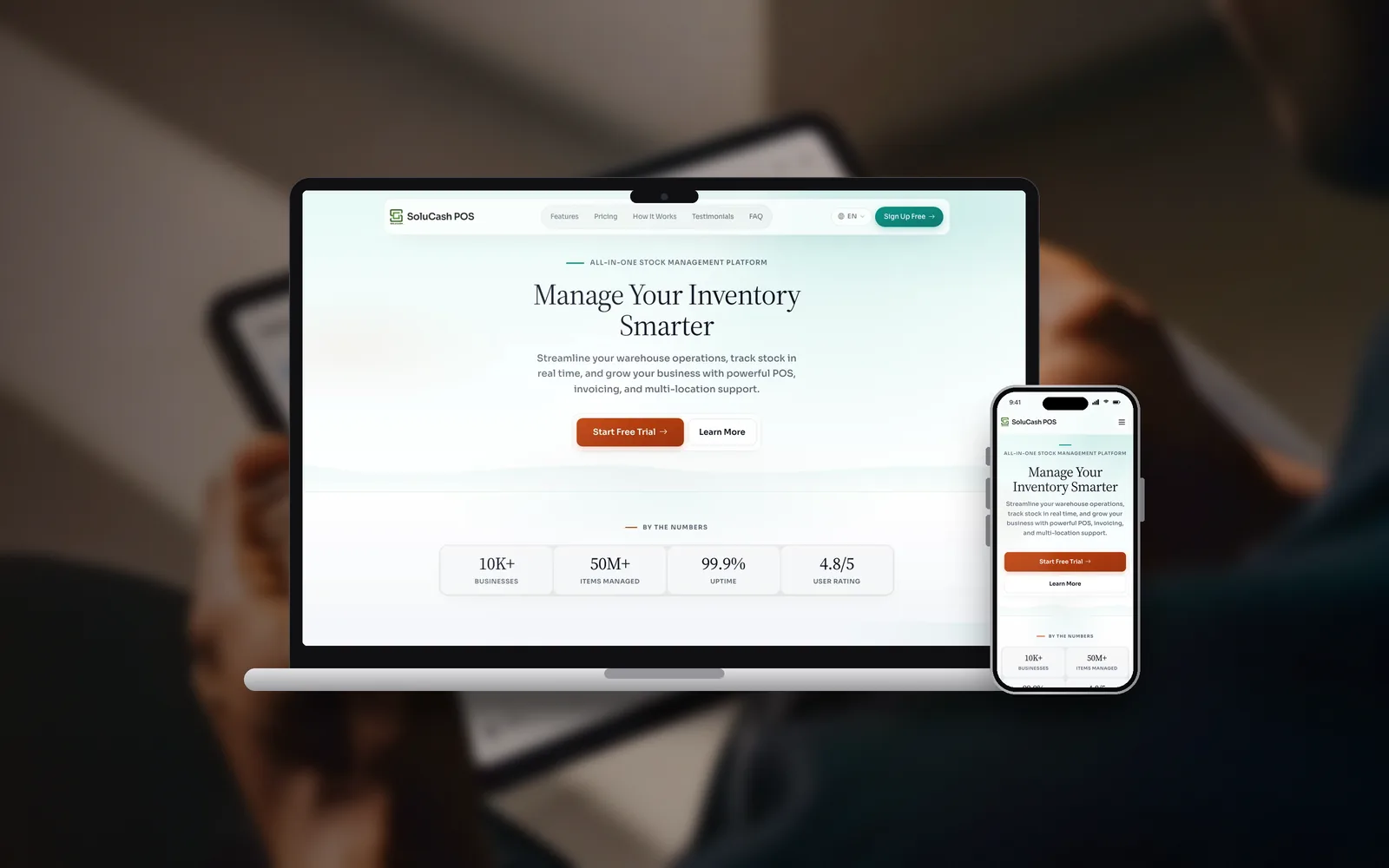
Custom POS and inventory software is a one-off build, starting around USD 10,000 for a focused first version: sales at the counter, stock across your locations and the reports you actually use. Subscription POS systems are cheaper to start, but you pay per location or register every month and work the way the product works. A custom build pays off when your process doesn't fit the off-the-shelf tools, when you need to work offline or with local payment providers they don't support, or when you plan to sell the system to other businesses as a product.
This guide uses SoluCash, the multi-company POS and business platform we designed, built and host for a client launching across African markets.
Buy or build: how to decide
Buy a subscription POS if:
- You run one or a few shops with a standard retail or cafe workflow
- Your payment providers and accounting software are already supported
- You'd rather pay monthly than fund a build
Build your own if one of these is true: your stock moves between warehouses, vans and shops in ways the tools can't track; your internet is unreliable and sales must keep going offline; your customers pay through local gateways, mobile money or bank transfer the tools don't support; per-register fees across many sites cost more each year than a build; or you want to offer the system to other businesses under your own brand.
What did we build for SoluCash?
SoluCash wanted one product that any shop, distributor or service business could sign up for, pay for locally and run its whole operation from, instead of separate tools and spreadsheets for sales, stock and accounts.
- A separate workspace for each company, with its own database, users, roles and settings, created automatically after sign-up and payment
- A point of sale that sells by barcode scan, search or product grid, and keeps working offline: sales are saved on the device and sync when the connection returns
- Stock across multiple warehouses, with transfers, stock counts, damages and printed barcode labels
- Purchases, invoices, quotations and returns, shared by PDF, email, SMS or WhatsApp
- Double-entry accounting, expenses, HR, projects and bookings, with 70+ built-in reports
- An online store and a client portal for each company, plus a staff mobile app on its own API
- Plan subscriptions paid through Stripe, PayPal, Paystack or Flutterwave, or by bank transfer with an uploaded proof
It is live with paying businesses, and because one installation serves every company, a new business can start selling the day it signs up.
Which features does a POS and inventory system need?
- Fast checkout: barcode scanning, quick product search, discounts, split payments and printed or digital receipts
- Offline sales that sync automatically, so a dropped connection never stops the till
- Stock by location, with transfers, low-stock alerts and stock counts
- Purchasing: supplier orders, goods received and purchase returns that update stock
- Roles and permissions, so cashiers, managers and owners see only what they should
- Reports on sales, profit, top products and stock value, by shop and by day
- Connections to your accounting, online store and payment providers
One business or many? Single-tenant vs multi-tenant
A system for your own shops only needs one company's data. If you want to sell the software to other businesses, it has to be multi-tenant: each customer gets a separate, secure workspace, and you need plans, billing, sign-up and an admin panel to run it all. SoluCash keeps each company in its own database, which makes data separation and backups simple. Multi-tenant adds scope, so plan it from the first version rather than bolting it on later.
Payments and local markets
Choose payment providers your customers already use. Stripe and PayPal cover the US, UK, Canada, Australia and New Zealand; Paystack and Flutterwave are widely used across Africa; Razorpay in India and KNET in Kuwait. Take card payments through the provider's own hosted page or terminal, so card details never touch your servers. For markets where bank transfer is common, an upload-the-proof flow with manual approval, as in SoluCash, works well.
What does it cost to build and run?
A focused POS and inventory system for one business starts around USD 10,000. Each extra module adds to that: accounting, HR, an online store, a mobile app, or the multi-tenant layer needed to sell it as a product. Ongoing costs to plan for:
- Cloud hosting, databases and backups
- Payment provider fees on each sale or subscription
- SMS, email and WhatsApp messages for receipts and alerts
- Receipt printers, barcode scanners and cash drawers for each counter
- Support, security updates and new features as you grow
Frequently asked questions
How much does custom POS software cost?
A focused first version for one business starts around USD 10,000. Accounting, HR, an online store, a mobile app or a multi-company SaaS layer add to the scope.
Is it cheaper to build a POS than to pay for a subscription?
For one or two shops, a subscription is usually cheaper. A custom build pays off across many locations, when you need features or local payment options the tools don't have, or when you plan to sell the system to other businesses.
Can a POS keep working without internet?
Yes, if it is built for it. SoluCash's point of sale saves sales on the device when the connection drops and syncs them automatically when it returns.
Can I sell my POS to other businesses as a SaaS?
Yes. It needs a multi-tenant design, with a separate workspace per company, plans, billing and an admin panel. SoluCash is built this way and takes subscriptions through Stripe, PayPal, Paystack and Flutterwave.
Do you support payment providers in Africa?
Yes. SoluCash takes payments through Paystack and Flutterwave, alongside Stripe, PayPal and bank transfer.
Related Services
Planning a project like this?
Tell us what you need. We reply within one business day with next steps, a rough timeline and the questions that matter.
More Insights
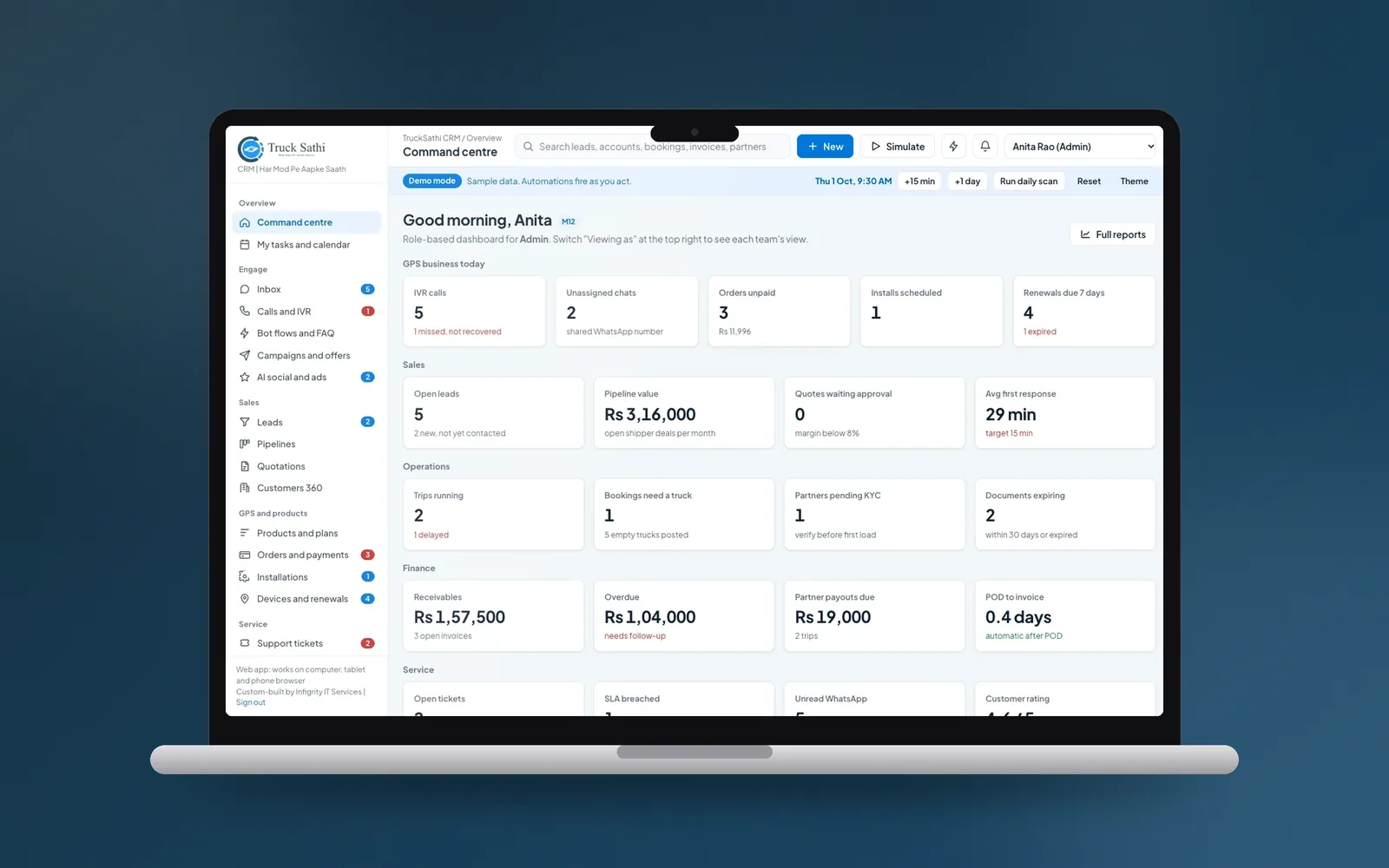
How to Connect WhatsApp to Your CRM: One Number, a Shared Inbox and No Lost Leads
Custom Property Management Software for UK Letting Agents: What It Costs and What It Must Do