Websites
Clinic and Hospital Websites: What Patients Need First, and How to Build It
How to design a clinic or hospital website for urgent and researching patients, with booking, plain-language treatment pages and trust, and two real builds.
By Kazim Noorani, Managing Director
A clinic or hospital website serves two visitors at once: someone who needs help now and wants a phone number or the right department immediately, and someone researching a doctor or treatment for a planned visit. The best sites put emergency contact, departments and booking within one tap, explain treatments in plain language, and build trust with real doctors, real photos and clear next steps on every page.
This guide draws on two sites we built: Zahra Mediplus Hospital, a multi-specialty hospital, and Dr. Yash S. Shah's orthopedic practice at Bodyline Hospital, both in Ahmedabad.
What does a patient need first?
- The emergency or main phone number, visible on every page
- The right department or doctor in as few steps as possible
- A way to book, call or message without hunting for it
- Location, opening hours and how to get there
- Plain-language answers about the condition or treatment
- Reasons to trust the doctor: qualifications, experience, real photos and patient stories
A hospital site built for urgency: Zahra Mediplus
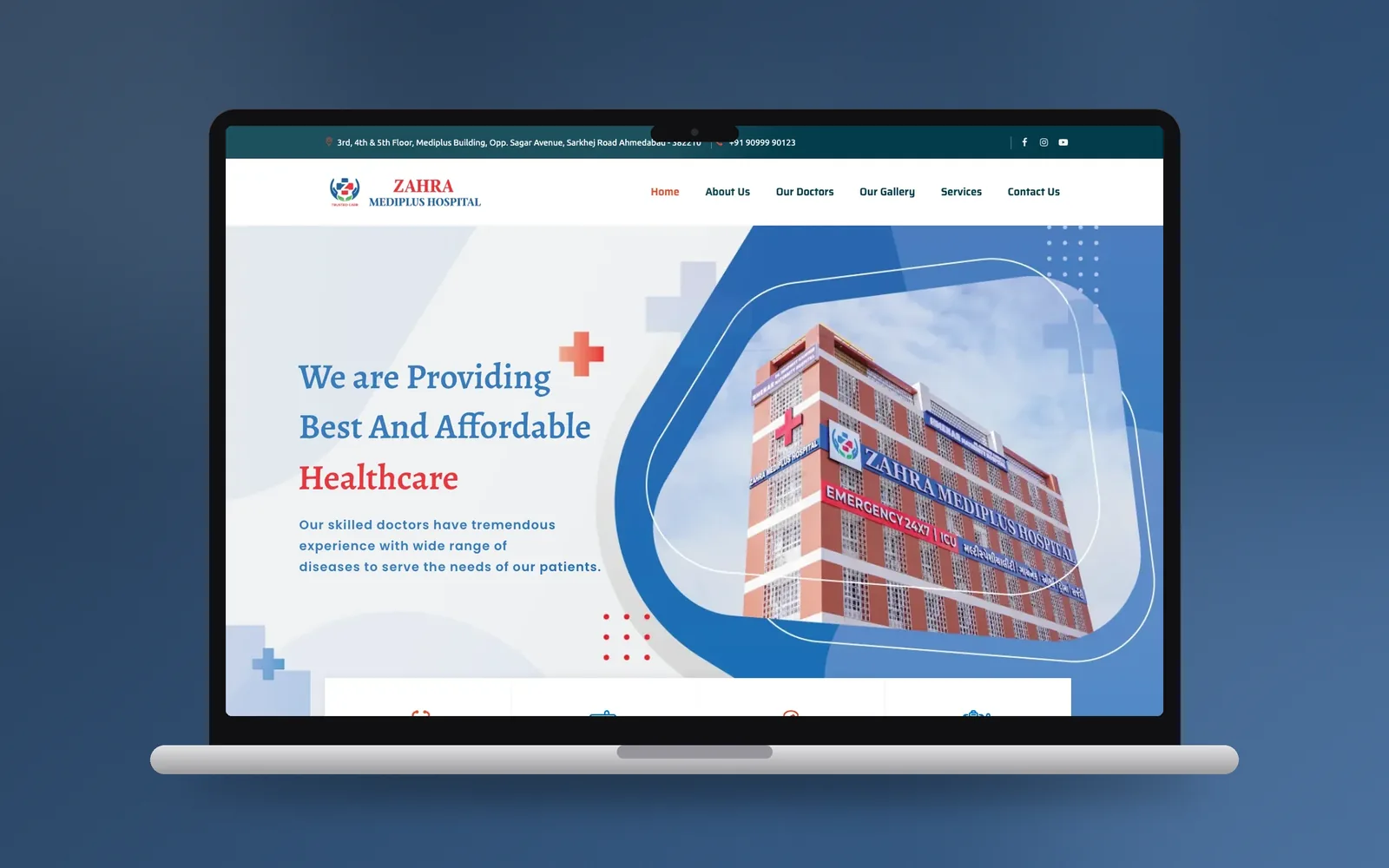
Zahra Mediplus Hospital offers care from cardiology to dermatology. Hospital visits are rarely leisurely browsing, so we designed the site around what a visitor needs fastest: the right department, a doctor's name and face, and a 24/7 emergency contact, rather than a typical corporate home page.
A quick-services grid at the top gets an anxious visitor to the right department in a few taps, while a full doctor team section further down serves someone comparing specialists for a planned procedure. Neither visitor gets in the other's way.
A specialist practice with paid video consultations: Bodyline
For Dr. Yash S. Shah, an orthopedic surgeon, we replaced an old WordPress site with a 25-page Next.js site. Treatment pages explain knee, hip, spine, shoulder and fracture care in plain language, so patients arrive knowing what to ask, and every page leads to the same three actions: book a video call, phone the clinic or send a WhatsApp message.
There are no stock or AI-generated faces: the site uses the doctor's own photos, patients' own published stories and 20 videos from his YouTube channel, each on the treatment page it explains. Patients book and pay for a WhatsApp video consultation in about a minute, and clinic staff get a push alert for every paid booking in an admin app on their phone, where they can reschedule, cancel, refund and block time.
Which pages does a clinic website need?
- Home: emergency or main number, departments or treatments, booking and location
- A page for each department or treatment, in plain language with common questions
- A profile for each doctor: qualifications, experience, languages and a real photo
- Booking: an appointment request or paid consultation, with fees shown before payment
- Patient information: insurance, what to bring, preparing for a visit
- Contact and location, with a map, parking and hours
What rules apply to healthcare websites?
Patient data must be handled under your country's health privacy rules, for example HIPAA in the US or UK GDPR in the UK, so keep booking forms to the minimum and store data securely. Medical advertising is also regulated in many countries: in Australia, for example, AHPRA restricts testimonials about clinical care. Check your regulator's rules before publishing reviews or results, and keep claims factual.
This is a summary, not legal advice.
How do clinics get found online?
Most patients search for a treatment or specialist plus a place. A complete Google Business Profile with photos, hours and reviews, a page for each treatment that answers patients' questions, fast mobile pages and accurate structured data for doctors and locations do most of the work. Keep doctor details, fees and hours in one place on the site, so a change updates every page at once, as we set up for Bodyline.
Frequently asked questions
What should a clinic website include?
A visible phone number, departments or treatments in plain language, doctor profiles with real photos, easy booking, location and hours, and clear next steps on every page.
Can patients book and pay online on a clinic website?
Yes. Patients on Dr. Yash S. Shah's site book and pay for a WhatsApp video consultation in about a minute, and staff manage bookings from a phone app.
Should a medical website use stock photos?
Real photos build more trust. Bodyline's site uses the doctor's own photos, patients' own published stories and his own videos instead of stock images.
How much does a clinic website cost?
Our business websites start from USD 1,500. Online booking with payments, doctor profiles and many treatment pages add to the scope.
Planning a project like this?
Tell us what you need. We reply within one business day with next steps, a rough timeline and the questions that matter.
More Insights
How to Redesign Your Website Without Losing Google Rankings

Websites and Software for Freight Forwarders and Logistics Companies: Quotes, Tracking and WhatsApp