Websites
Websites and Software for Freight Forwarders and Logistics Companies: Quotes, Tracking and WhatsApp
What importers and shippers look for on a logistics website, how to turn visits into quote requests, and when you need tracking apps or a CRM, with real builds.
By Kazim Noorani, Managing Director
Importers and shippers visit a logistics website to answer three questions fast: can you move my cargo on this route, roughly what will it cost, and who do I talk to. A site that explains each service and route plainly, makes requesting a quote and tracking a shipment easy, and puts WhatsApp on every page turns more of those visits into inquiries. As the business grows, a CRM and apps can run quotes, bookings, tracking and payouts behind it.
We use two real builds as examples: United Express, a freight forwarder in Kuwait, and Truck Sathi, a trucking and GPS business in India.
What should a freight forwarder's website include?
- A page for each service, such as sea freight (LCL and FCL), air freight, land freight, warehousing and customs clearance
- Your main routes, named the way customers search for them, for example China to Kuwait
- A short quote request form: origin, destination, cargo type, weight or volume and contact details
- A shipment tracking page
- WhatsApp and phone on every page, since many buyers prefer to message
- How it works, from booking to delivery, and an FAQ for first-time importers
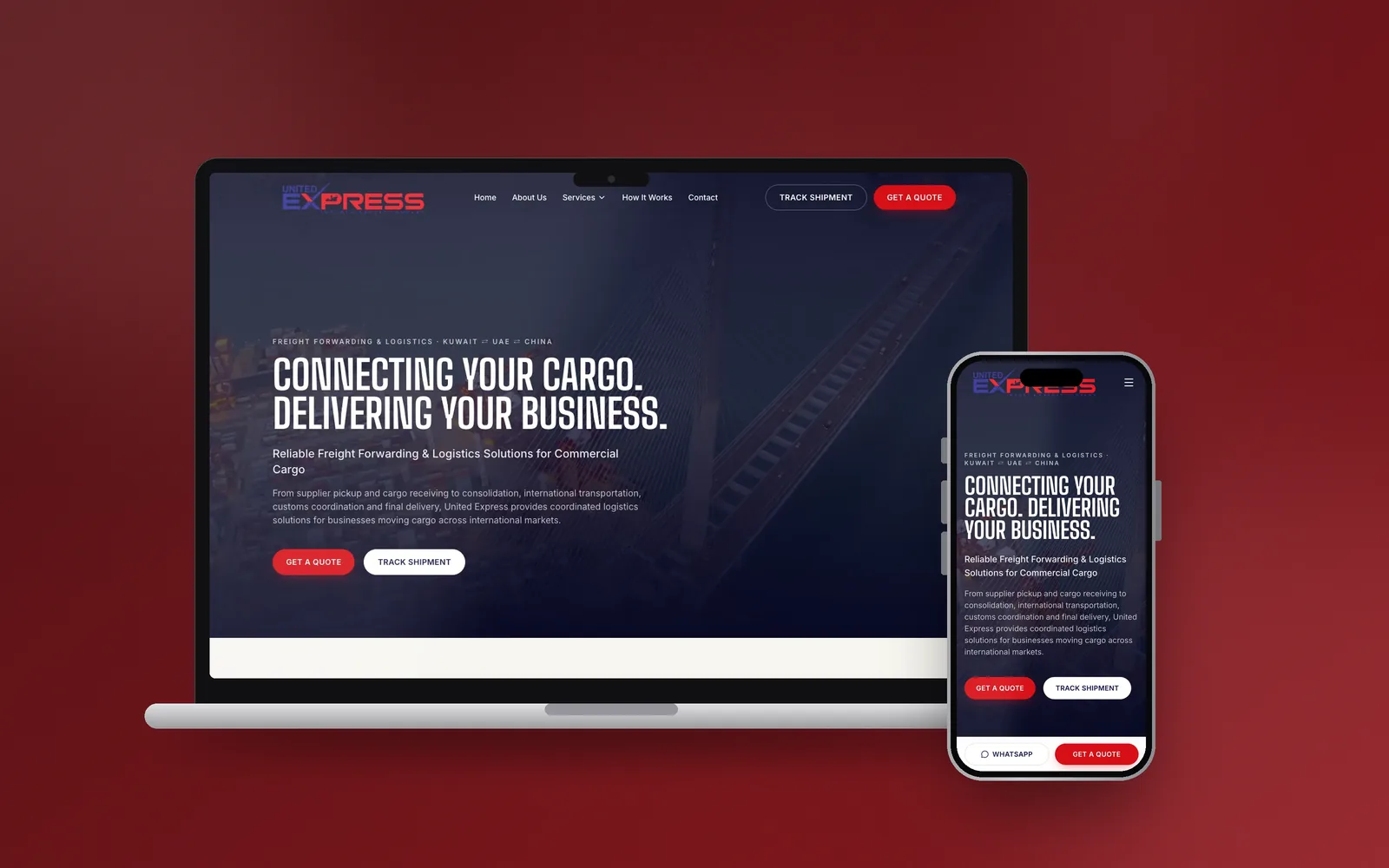
A real example: United Express, Kuwait
United Express moves cargo from China and Dubai to Kuwait by sea (LCL and FCL), air and land, with warehouse consolidation in Yiwu and Guangzhou and customs clearance coordination. Before the new site, importers had to call or message to find out how their cargo would arrive and what it would cost.
We built a fast Next.js website with a clear page for each service, dedicated get-a-quote and track-shipment pages, and page titles and content built around how Kuwaiti importers search, such as China to Kuwait cargo and freight forwarder Kuwait. Importers can now understand the service, request a quote and reach the team on WhatsApp from any page.
When do you need software, not just a website?
A website brings in inquiries. Once volume grows, quotes, bookings and follow-up start living in spreadsheets and chats, and that is where a CRM and apps pay off.
Truck Sathi sells GPS trackers, books trucks and matches trucks with loads. We built a driver and owner app with live vehicle tracking, route history, alerts and a load market in eight Indian languages, a WooCommerce site for bookings and GPS products, and a custom CRM. The CRM handles leads, quotations, a shared WhatsApp inbox, freight bookings, load matching, invoices and partner payouts, with automation rules running in the background.
How do logistics companies get found online?
- Build a page for each important route and service, not one page that lists everything
- Answer the questions importers ask: transit times, documents, customs, prohibited items and how pricing works
- Publish in the languages your customers use, such as Arabic and English in the Gulf
- Keep pages fast on phones, since many buyers search from mobile
- Collect reviews from importers and list the business on Google with real photos
What does it cost?
Our business websites start from USD 1,500 and usually take 3 to 6 weeks. Live tracking, customer portals and a CRM are custom software, which starts from USD 10,000 for a focused first version. We build the website first and add software as the volume justifies it.
Frequently asked questions
What should a freight forwarder's website have?
A page for each service and main route, a short quote request form, a shipment tracking page, WhatsApp and phone on every page, and clear answers about transit times, documents and customs.
Can customers track shipments on our website?
Yes. A tracking page can look up a shipment by reference number, using data from your system or your carriers.
Do logistics companies need a CRM?
Once quotes, bookings and follow-up outgrow spreadsheets and chats, yes. Truck Sathi's CRM runs quotations, a shared WhatsApp inbox, freight bookings, load matching and payouts in one place.
How much does a logistics website cost?
Our business websites start from USD 1,500. Tracking portals, apps and CRMs are custom software, starting from USD 10,000 for a focused first version.
Planning a project like this?
Tell us what you need. We reply within one business day with next steps, a rough timeline and the questions that matter.
More Insights
Clinic and Hospital Websites: What Patients Need First, and How to Build It
How to Redesign Your Website Without Losing Google Rankings